
The Reserve Bank of India (RBI) has kept its key lending rate, the repo rate, unchanged at 5.25 per cent for the second consecutive time, citing concerns over rising energy prices, supply disruptions from the West Asia crisis, and potential inflationary pressures.

The Indian rupee depreciated 16 paise to settle at a fresh lifetime low of 96.86 against the US dollar, marking its ninth consecutive session of decline, driven by elevated global crude prices and a strong dollar.

The Indian government has relaxed foreign direct investment (FDI) norms for countries sharing land borders with India, including China, a move that amends press note 3 of 2020.

India's fiscal deficit is projected to reach 4.5 per cent of GDP for the current fiscal year, exceeding the budgeted target, as the government's policy responses to the West Asia conflict are expected to strain public finances, according to research firm BMI.

The Indian rupee crashed to a record closing low against the US dollar due to rising global crude oil prices, a strengthening dollar, and geopolitical tensions in the Middle East.

India's exports rose 9.03 per cent to $38.49 billion in April, the highest in six months, driven by healthy growth in sectors such as electronics and engineering goods, while the trade deficit widened to a five-month high of $26.42 billion. According to the commerce ministry data released on Thursday, imports increased by 19.12 per cent year-on-year to $64.91 billion in April due to a rise in shipments of crude oil and fertiliser.

India's exports entered negative territory after a gap of about two years, declining sharply by 16.65 per cent to $29.78 billion in October, mainly due to global demand slowdown, even as trade deficit widened to $26.91 billion, according to data released by the commerce ministry on Tuesday. Key export sectors, including gems and jewellery, engineering, petroleum products, ready-made garments of all textiles, chemicals, pharma, marine products, and leather, recorded negative growth during October. Imports during the month under review rose by about 6 per cent to $56.69 billion on account of increase in the inbound shipments of crude oil and certain raw materials such as cotton, fertiliser and machinery.

Singaporean brokerage DBS said in a report that it expects exports to pick up once the GST-driven distortions subsided, but it warned that the traditional product mix will hinder its ability to participate in the ongoing trade upturn.

Contracting for the third month in a row, India's exports declined by 8.8 per cent to $33.88 billion in February due to slowdown in global demand, even as the trade deficit touched about a year low of $17.43 billion during the month, according to official data released on Wednesday. Imports also declined by 8.21 per cent to $51.31 billion as against $55.9 billion recorded in the corresponding month last year. Cumulatively, however during April-February this fiscal, the country's overall merchandise exports rose by 7.5 per cent to $405.94 billion.
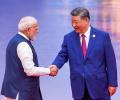
India's dual pursuit of a robust strategic partnership with Washington and a pragmatic, tension-management policy with Beijing represents the essence of modern multi-alignment. By embracing economic pragmatism, learning to compartmentalize political differences, and engaging in continuous dialogue, India can secure its borders, grow its economy, and contribute to a stable, multipolar Asian century, points out Ambassador Rajasekhar.
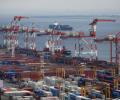
India's merchandise exports in November rose by 26.49 per cent to $29.88 billion on account of healthy growth in sectors such as engineering, petroleum, chemicals and marine products, according to provisional data released by the government on Wednesday. The exports stood at $23.62 billion in November 2020. Imports in November were at $53.15 billion, an increase of 57.18 per cent over $33.81 billion in the same month of 2020, leaving a trade deficit of $23.27 billion.

India has trade deficit with as many as 81 countries including China, Qatar, Korea, Japan and Indonesia in 2012-13, Parliament was informed on Wednesday.

Gold prices experienced a significant drop in futures trading due to global selloff, inflation concerns, and a strong US dollar. Analysts predict a continued downward trend amid geopolitical tensions and potential rate hikes.
India's exports declined by 2.83 per cent to $33.90 billion in November this year compared to $34.89 billion a year ago, government data released on Friday showed. Imports also declined to $54.48 billion in the month under consideration, as against $56.95 billion recorded in November 2022.
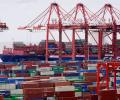
India's exports rose by 69.35 per cent to $32.27 billion in May, driven by healthy growth in sectors such as engineering, petroleum products and gems and jewellery, even as trade deficit widened to $6.28 billion, according to government data released on Tuesday. Exports in May last year stood at $19 billion, and in May 2019 it was at $29.85 billion, the data showed. Imports too grew in May 2021 by 73.64 per cent to $38.55 billion -- leaving a trade deficit for the month being reviewed at $6.28 billion.

The World Bank has increased India's economic growth projection for FY27 to 6.6 per cent, citing resilient domestic demand, while simultaneously cutting its global economic growth outlook due to the conflict in West Asia.

The Reserve Bank of India (RBI) has debunked reports of gold sales, stating that its physical stock of gold remains unchanged at 880.52 tonnes, countering claims of selling approximately USD 12 billion to protect foreign-currency reserves.

India's merchandise exports in June rose by 16.78 per cent year-on-year to $37.94 billion while the trade deficit ballooned to a record $25.63 billion on account of a steep increase in gold and crude oil imports, according to the government's preliminary data released on Monday. The export growth in June moderated from 20.55 per cent in May and 48.34 per cent in June 2021. During the month under review, exports of engineering, pharmaceutical and plastic products recorded negative growth.

During April-November this financial year, trade gap stood at $116.8 billion. In 2010-11, it was aggregated at $119 billion.

India's net foreign direct investment (FDI) surged more than fourfold to $6.58 billion in April 2026, driven by a significant increase in equity inflows and reduced repatriation by foreign investors, according to the Reserve Bank of India (RBI).
India's merchandise exports rose by 6.21 per cent to $33.57 billion in October this year even as trade deficit ballooned to $31.46 billion during the month, government data showed on Wednesday. Imports increased to $65.03 billion in the month under consideration, as against $57.91 billion recorded in October 2022. The country's trade deficit in October stood at $31.46 billion.

'There are very few issues and a political call needs to be taken about some of them.'

The Indian rupee rebounded against the US dollar following intervention by the Reserve Bank of India, amidst ongoing concerns about foreign capital outflows, rising crude oil prices, and geopolitical instability.

Indian benchmark indices Sensex and Nifty surged significantly in early trade, tracking a global rally fueled by US President Donald Trump's declaration of an end to the war with Iran and a subsequent drop in crude oil prices.

India's merchandise exports experienced a slight decrease in February, while imports surged due to increased gold and silver purchases, leading to a widened trade deficit. The West Asia crisis is expected to further impact trade in the coming months.

The trade deficit stood at $10.14 billion compared with $9.22 billion in November, a trade ministry official said on Friday.
Exports in June rose by 23.52 per cent to $40.13 billion while the trade deficit ballooned to a record level of $26.18 billion mainly due to jump in gold and crude oil imports, the government data said on Thursday. The country's export growth in May was 20.55 per cent. Imports expanded by 57.55 per cent to $66.31 billion in June compared to the year-ago month, the data showed.

'You have seen the retrenchments by big corporates in the IT industry because they are not getting enough offers.' 'MSMEs in the manufacturing sector are really struggling. They do not know what to do. They are not able to predict what will happen tomorrow.'
India's exports recorded a flat growth of 0.59 per cent to $31.99 billion in November, even as trade deficit widened to $23.89 billion during the month, according to the data released by the government on Thursday. Exports stood at $31.8 billion in November last year. Imports rose by 5.37 per cent to $55.88 billion in November as compared to $53.03 billion in the corresponding month a year ago, the data showed. During April-November 2022, exports rose by 11 per cent to $295.26 billion as against $265.77 billion in the same month last year.
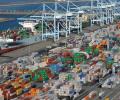
India's exports contracted 12.2 per cent to $34.48 billion in December 2022, mainly due to global headwinds, and the trade deficit widened to $23.76 billion during the same period, according to official data released on Monday. Imports in December 2022 also declined 3.5 per cent to $58.24 billion as against $60.33 billion in the year-ago period. In December 2021, exports stood at $39.27 billion and the trade deficit was at $21.06 billion.

Reserve Bank Governor Sanjay Malhotra announced that India's foreign exchange reserves stand at a healthy $682.3 billion as of May 29, 2026, providing approximately 11 months of import cover and strong protection against external shocks.

US trade deficit rose to its highest level since 2012.

'At the first sign of real trouble, that money will move. There will be a run.'
BSE index falls 2.14 pc; NSE ends 2.08 pc lower

India's trade deficit will widen till March 2011 and is likely to be between $115 billion and 125 billion, a top DGFT official said.

India defeated arch-rivals Pakistan 4-3 in a thrilling FIH Pro League match in London, extending their decade-long unbeaten streak against them in international hockey. Despite Pakistan taking an early lead, India rallied with goals from Abhishek, Nilakanta Sharma, Sukhjeet Singh, and Rajinder Singh. Pakistan mounted a late comeback in the final quarter, but India held on for a crucial victory, moving up to seventh in the standings.

The closure of the Strait of Hormuz has disrupted some 20 per cent of the global flows but even if it opens, damages to production facilities in the region will take time to repair, points out Sunita Narain.

The US trade deficit narrowed less than expected in October as lower crude oil prices failed to offset a jump in imports, while an increase in exports suggested the economy was weathering faltering global demand.
India's organised gold jewellery retail sector is projected to experience a 13-15 per cent year-on-year decline in sales volumes this fiscal, following an 8 per cent drop last year, due to elevated gold prices and a recent import duty hike, according to a Crisil report.
